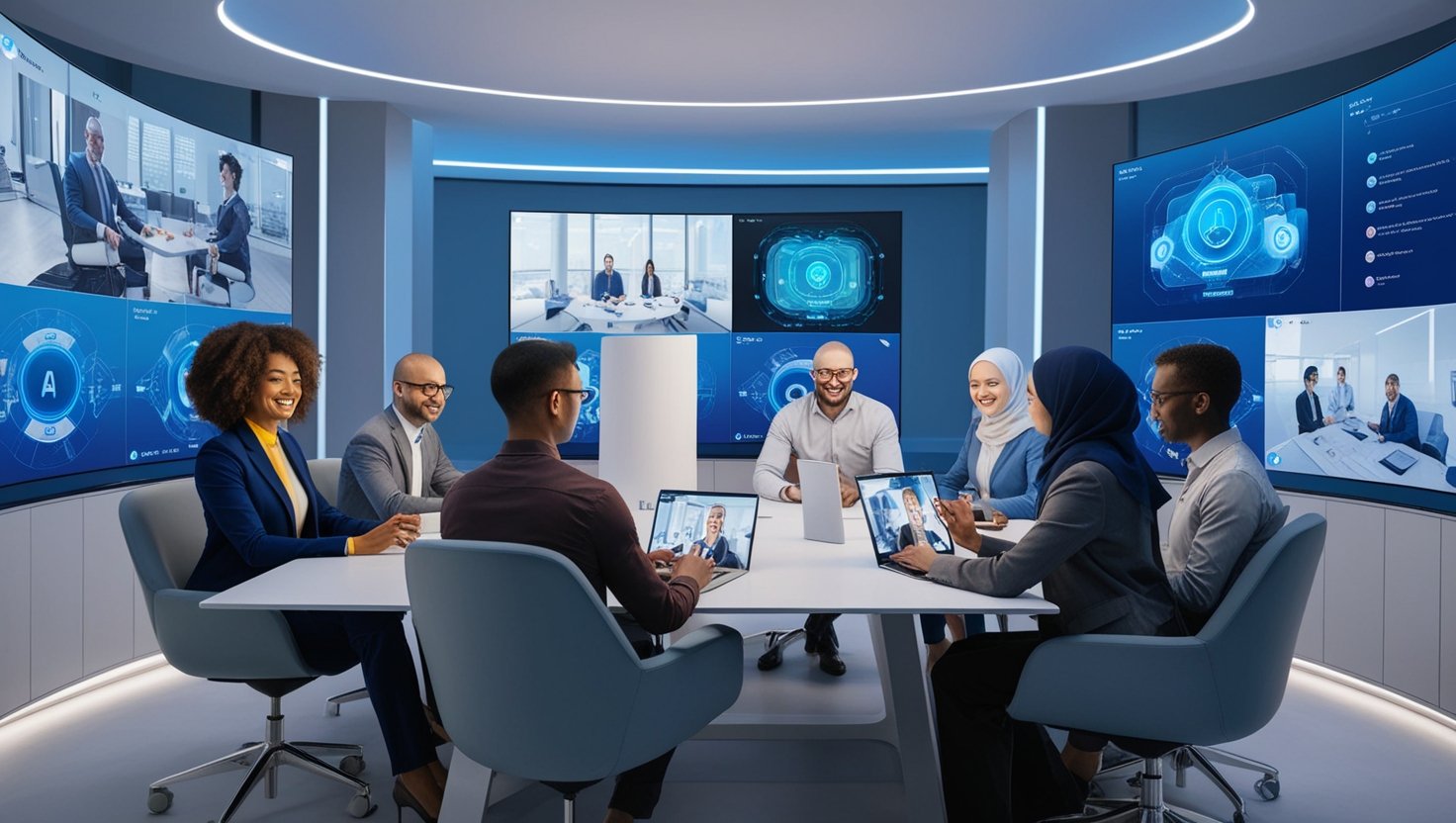



Imagine walking into a virtual workspace where teammates from around the globe are not only present but actively contributing in real-time, with no barriers in language, time zones, or technology. The buzz of ideas flows seamlessly, tasks are allocated almost intuitively, and decisions happen at lightning speed. This is not a futuristic dream; this is the reality AI is crafting for team collaboration and communication today.
Welcome to the new era of teamwork.
Setting the Stage: Collaboration in the Digital Age
Teams today are more dynamic than ever. Remote work, hybrid models, and cross-border collaborations have made communication both a priority and a challenge. Traditional tools like emails, video calls, and chat platforms helped bridge some gaps, but the cracks remain visible: miscommunication, delays, and the inefficiencies of managing time and context.
Enter AI — the catalyst transforming not just how teams work but how they connect. With AI, collaboration is no longer confined by the old rules of engagement. Let’s explore how.
Act 1: Breaking Down Language Barriers
Imagine a design team where one member speaks Mandarin, another French, and another Spanish. In the past, this diversity could have slowed communication. Today, AI-powered tools like real-time language translation enable every participant to express their ideas in their native tongue while others receive instant translations.
Take the case of DeepL or Google Translate integrated into platforms like Microsoft Teams. Now, “Bonjour” becomes “Good Morning” in a fraction of a second. The result? More inclusivity, richer conversations, and fewer misunderstandings.
Act 2: The AI Assistant That Never Sleeps
Have you ever wished for a meeting secretary who remembers everything, never gets tired, and instantly organizes your to-dos? AI does just that.
- Transcription tools like Otter.ai and Sonix capture every word spoken in meetings, transforming them into searchable notes.
- AI scheduling assistants like Clockwise and Motion juggle team calendars, suggesting optimal meeting times across time zones.
These assistants aren’t just passive observers; they actively participate. For instance, they can flag when a conversation veers off-topic or even summarize discussions in real time for those who join late. It’s like having a personal assistant for every single team member.Act 3: Supercharging Creativity and Brainstorming
Picture this: You’re in a brainstorming session, and someone throws out an idea. Instead of trailing off into silence, AI tools like ChatGPT jump in, offering suggestions, refining concepts, or even generating prototypes.
Consider Miro, a collaborative whiteboard tool. Pair it with an AI like Figma’s AI-driven design assistant, and your team’s rough sketches become polished wireframes in minutes. AI doesn’t replace human creativity; it amplifies it, ensuring that no idea is left unexplored.
Act 4: Monitoring and Improving Team Dynamics
How do you measure the “health” of a team? That’s a question AI is beginning to answer.
- Tools like Microsoft Viva analyze communication patterns to provide insights into team well-being. Are meetings too frequent? Is someone being left out of key conversations? Viva can tell.
- AI sentiment analysis tools gauge the tone of conversations, alerting managers if stress levels or negativity seem high.
The goal isn’t surveillance—it’s awareness. These insights allow leaders to intervene proactively, fostering a culture of transparency and empathy.
Act 5: A Future Where AI Becomes a Teammate
Imagine an AI that doesn’t just assist but contributes as an equal. It understands your team’s objectives, adapts to individual preferences, and anticipates challenges before they arise. While we’re not there yet, companies like OpenAI and DeepMind are already working on systems that can draft entire project plans, suggest innovative solutions, and even resolve conflicts with logic-driven mediation.
The future of AI in collaboration isn’t about replacing humans; it’s about creating synergy between human intuition and machine efficiency.
The Finale: Redefining Collaboration
AI is reshaping team collaboration, not by dictating how we work but by enhancing the way we connect. It eliminates barriers, lightens workloads, and provides insights that were previously impossible to obtain.
In this AI-powered world, teams aren’t just working together; they’re thriving together. The narrative of collaboration is no longer about adapting to tools but about tools adapting to us.
As we embrace this odyssey, one thing becomes clear: the best teams of tomorrow will be the ones that harness the full potential of AI—not as a tool, but as a partner.